
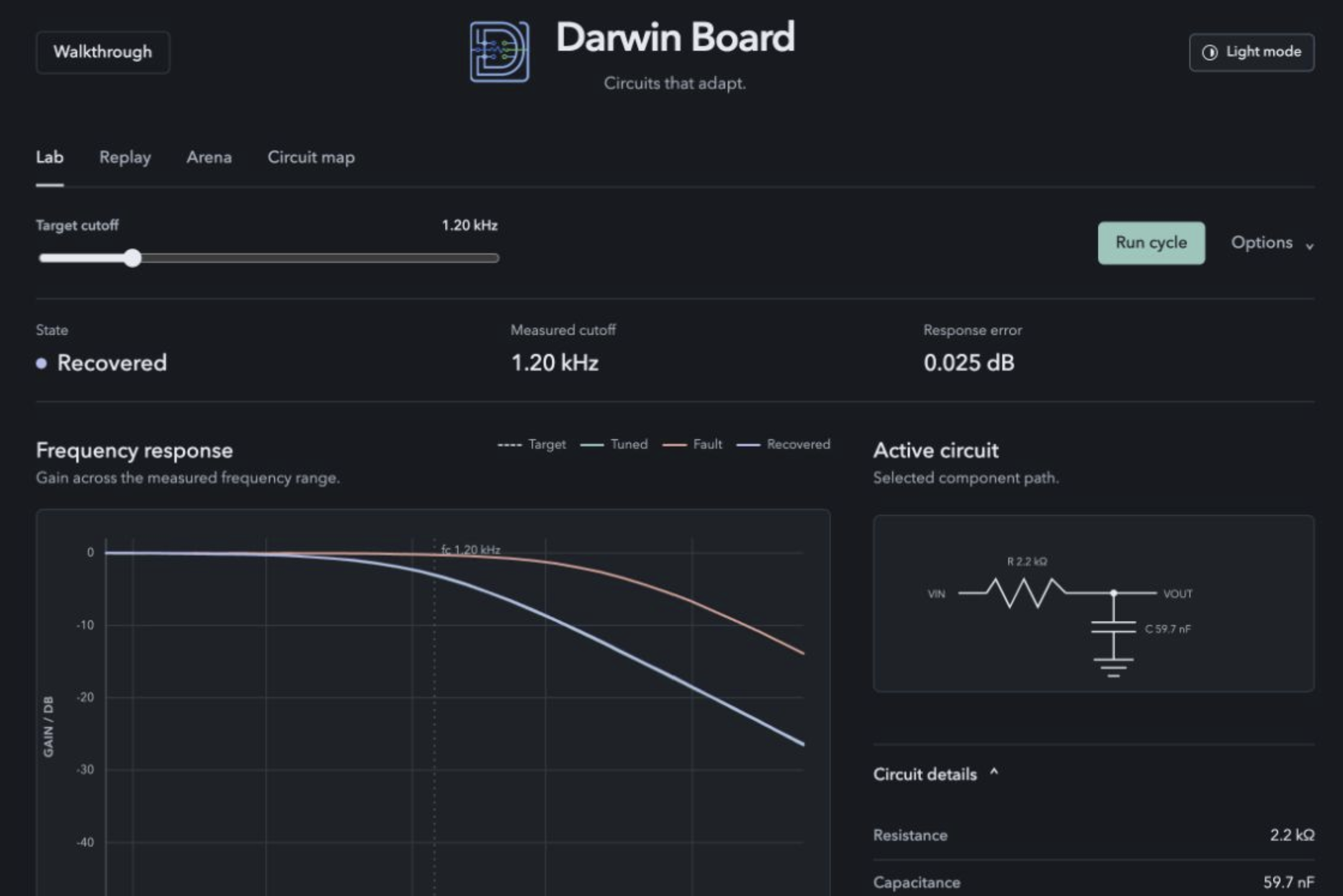
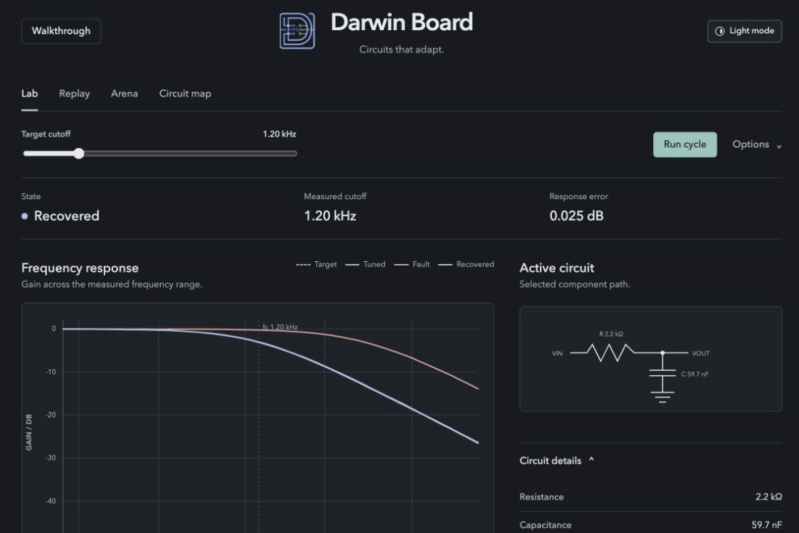
We are surrounded by evolving algorithms and AI models, and it feels like we have to evolve to them as well. Of course, the world itself is always evolving, and when we have to implement filtering circuits based on current environments it might not last all that long. [Saikarthik Ramakrishnan] realized that this phenomenon can easily apply to simple RC circuits, so why not make them adapt to the changing world itself? This is exactly what the Darwin Board is meant to do: act like an evolving simple RC circuit for whatever environment or signal you want gone.
RC circuits are normally considered to be relatively simple in the world of circuits; however, the real world isn’t always all that simple. This simple evolutionary algorithm implemented by [Saikarthik Ramakrishnan] attempts to apply similar principles used in other evolving models to the humble RC circuit. Based on an ESP32, the Darwin Board is a fairly simple model of 2040 possible combinations of genomes. Yes, each possible RC circuit is its own genome, which allows simple evolution from one to another based on current requirements.
You should certainly consider checking out the project’s GitHub repository here to try out the mutating circuit itself. While this project might complicate what is normally fairly simple, there is sometimes beauty in simplicity. So why not use a comically simple circuit for a smart home feature?


