
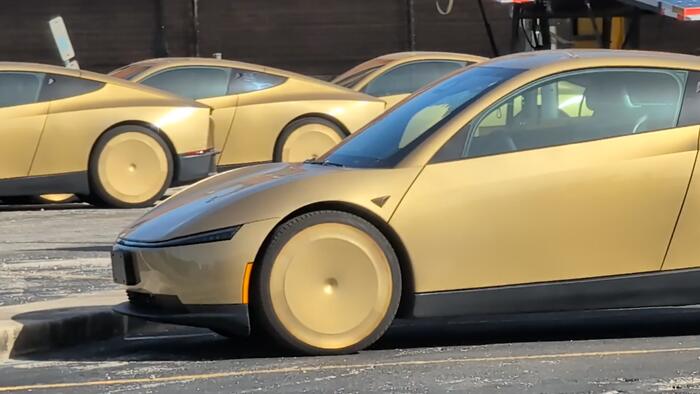
Tesla’s self-driving Robotaxis began accepting passengers in San Antonio on Monday morning, giving riders another autonomous ride option in the Alamo City.
The launch brings Tesla’s “Cybercabs” to San Antonio after the company first rolled out robotaxi service in Austin. Tesla has also expanded the service to Dallas and Houston.
Tesla’s initial Robotaxi service area covers a large portion of San Antonio, stretching across the city’s North, South, East and West sides. The company’s launch map shows a designated service zone that includes downtown San Antonio and several major highways, including Interstate 10, Highway 281, Interstate 35, Loop 410 and Loop 1604.
KSAT’s Hunter King tested the new service, requesting a ride from the KSAT station to North Star Mall. The experience began much like a traditional rideshare: He opened an app, selected a destination and waited for a vehicle.
King said the app placed his pickup location a block or two away from the station. That meant walking in the rain before reaching the vehicle.
Once he got to the Tesla, the app allowed him to unlock it. The vehicle detected when he had not yet fastened his seat belt, then began moving after he buckled in.
Inside, a screen displayed nearby vehicles as the Robotaxi traveled through San Antonio streets. King said the vehicle stopped at stop signs and traffic lights during the ride.
The route, though, did not include highways.
The cost of the trip was $16. King said he previously checked the same trip on Waymo, where it was about $23. An Uber was also about $16, he said.
The test ride also raised questions about who is responsible if a driverless vehicle is involved in a crash.
Beau Correll, managing attorney at Correll Law Firm, said that when a fully autonomous vehicle operates without human intervention, the company can take the role of the operator under Texas law.
“It’s generally accepted that when full self-driving gets to a certain level and there’s no intervention of a human that the company itself stands in the shoes of the operator instead of the driver and that’s the way it is in Texas,” Correll said.
Correll said the insurance question becomes less clear if another driver causes a crash and does not have enough insurance to cover a passenger’s injuries. He encouraged riders to review their own uninsured and underinsured motorist coverage before using a Robotaxi.
Tesla’s terms also include an arbitration provision. Riders generally agree to resolve disputes through individual arbitration rather than before a judge or jury, though the terms allow for individual small claims cases and provide a 30-day window to opt out of arbitration.
The San Antonio launch comes months after Tesla Cybercabs were spotted in a lot off Heimer Road near Highway 281 and Bitters Road.
Tesla now joins Waymo, which has been operating autonomous rides in San Antonio since earlier this year.
One key difference between the two services is the technology behind their autonomous driving systems. Tesla relies on cameras, while Waymo uses a combination of sensors.


